


Trending
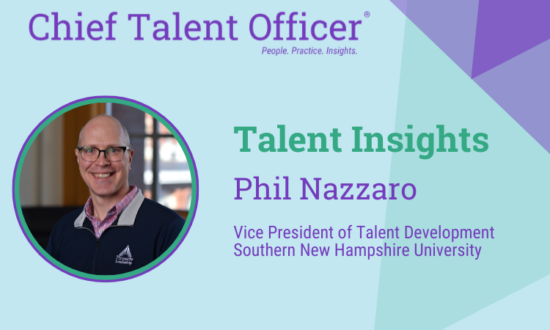
Talent Insights: Phil Nazzaro advocates authentic, purposeful and human-centered values
Southern New Hampshire University’s Vice President of Talent Development Phil Nazzaro shares his passion, values and strategies for helping employees and organizations thrive.

5 strategies for talent leaders to foster problem-solving within teams
Talent leaders can support problem-solving within teams by creating a culture of collaboration, developing skills, supporting innovation and creative thinking, enhancing leadership skills and cultivating a positive team environment.
Navigating the digital deluge: A blueprint for learning and talent leaders
For CLOs and talent development leaders, embedding digital wellness into the fabric of organizational learning and talent strategies is not just an investment in technology — it’s an investment in the future of work.
Becoming a skills-driven organization that knows, grows and connects talent to opportunities
As business and talent management needs evolve in ways we can’t yet conceive, skill readiness and adaptability provide the best way forward.
Optimizing AI strategy: The coach-player role of talent and HR leaders
Talent leaders’ unique perspective and leadership are essential for organizations to fully leverage the potential of AI on a large scale.
Talent Insights: Chris Augustine leads with empathy and integrity to promote inclusiveness and equity
Dr. Chris Augustine, who most recently served as chief people officer for World Vision Canada, shares her career journey, core values and principles, and advice for driving successful and proven talent initiatives.
Wired for empathy: Nurturing a technologically advanced, deeply human workplace
Leaders must effectively navigate the modern workplace’s technological evolution, striking a balance between innovation and empathy.
Talent Insights: Gary Lee balances empathy and evidence in talent management
Dassault Systemes Organization and Business Partner Director Gary Lee shares his journey, talent strategies and lessons learned.

Empowering workplace inclusivity: How to show up for your co-workers
Creating an environment where everyone feels valued promotes positivity and enables all to thrive and reach their full potential.
Leading with care: An enlightened leader’s guide to navigating uncertain times
Here are a few strategies for honesty, accountability and self-care in times of turmoil.
Navigating contingent talent: Your strategic advantage
Talent managers must be intentional in their hiring efforts to meet client, seasonal and organizational needs.
Embracing failure
Letting go of the fear to fail can be an important driver for women to achieve success in the workplace.
The power of language: Transforming global business expansion
Discover how language learning can enhance employee skills for global competitiveness, create a more inclusive and diverse workplace, drive employee engagement and retention, and more.
Talent Management announces winners of inaugural Talent Trailblazers awards program
Talent Management recognizes 6 HR and talent professionals for their immense impact on the field.
Unleashing the power of data analytics: Revolutionizing HR into a strategic business partner
What is the role of data analytics in talent management? It can help minimize hiring mistakes, enhance performance management, boost employee engagement and optimize talent investments, as well as transform HR into a strategic business partner.
Hiring for the future
As another class of graduates enters the labor market, talent leaders can utilize AI technology throughout the hiring process to close skills gaps and retain the next generation of young talent.
Q&A: TalentEd Matters’ Jewel Celestine
Talent Management board member Jewel Celestine, founder and executive and organizational coach at TalentEd Matters shares her insights on talent management today.